
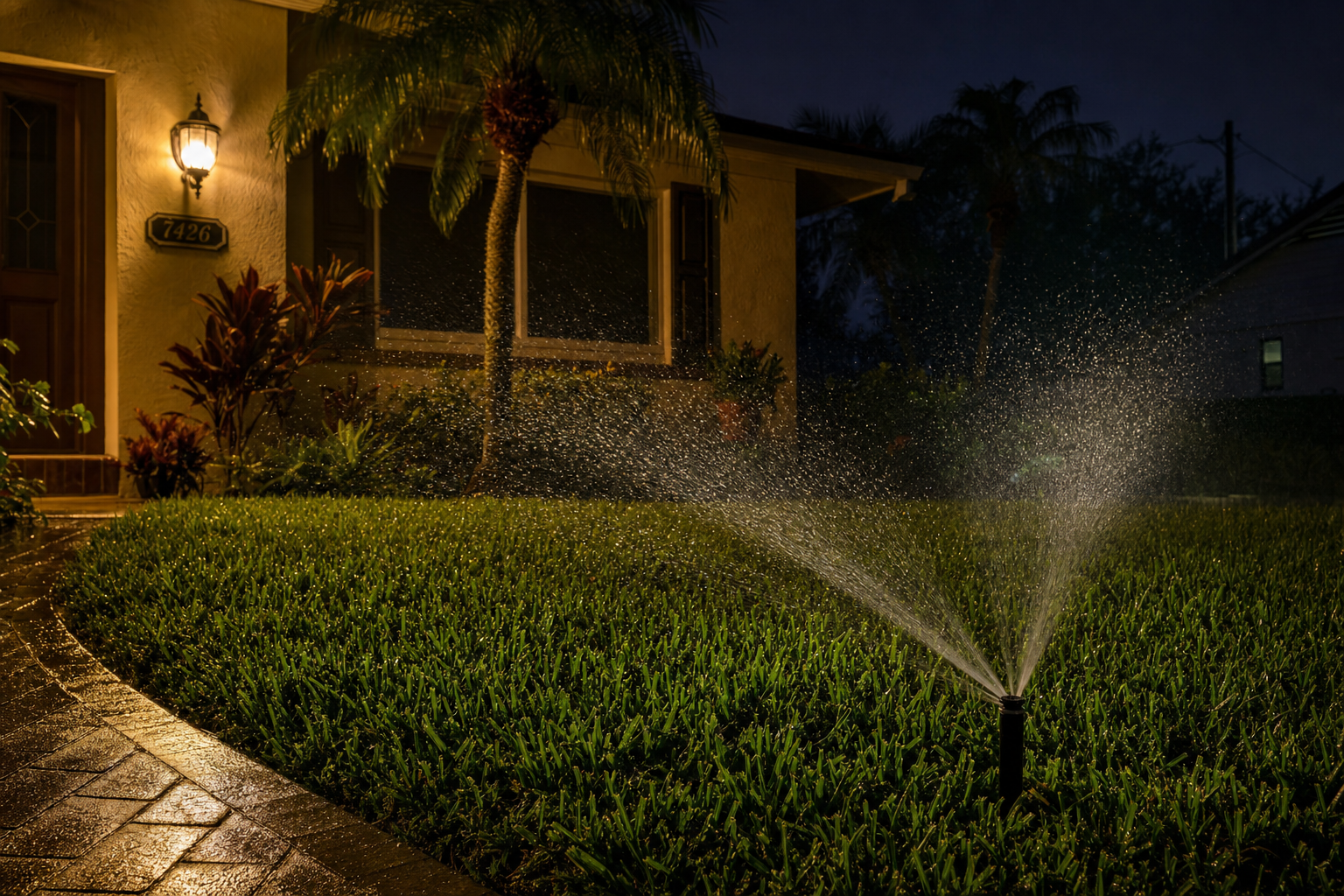
Your sprinkler system runs at 2 a.m. You’re asleep. You don’t even know it’s happening.
And yet, under Sarasota County’s 2026 drought restrictions, that automatic cycle could be running on the wrong day — or without a functioning rain sensor — and you could be looking at a fine of $500 or more. The county stopped issuing warnings in April 2026 and moved directly to citations.
Here’s a straight-talk breakdown of what you’re legally required to have, and what violations look like in the real world.
Florida Law Requires Rain Sensors on Every Automatic Irrigation System
Florida Statute § 373.62 mandates that every automatic irrigation system in the state must have a working rain sensor, soil moisture sensor, or evapotranspiration (ET) controller that shuts off the system when sufficient rainfall has occurred. This isn’t a suggestion — it’s the law, and it’s been on the books for years.
The problem? Many older systems in Sarasota have sensors that are broken, bypassed, or simply never installed correctly. During a drought, a failed sensor means your system runs even after rain — burning through your water budget and putting you out of compliance.
Phase 3 Drought Rules Add Another Layer of Compliance
On top of the sensor requirement, Sarasota’s Phase 3 Water Shortage restrictions limit irrigation to:
- One day per week (assigned by address)
- Hours: 12:01 a.m.–4 a.m. or 8 p.m.–11:59 p.m. only
- No daytime irrigation
Violations are now being issued on the spot. A neighbor complaint, a county inspector, or even a utility data flag can trigger a citation.
The Most Common Violations We See
- Timer-only systems — no rain sensor, no smart override. These water on a fixed schedule regardless of rainfall or restrictions.
- Broken or bypassed rain sensors — the sensor exists but doesn’t function, giving a false sense of compliance.
- Wrong watering day — the system is programmed for a day that doesn’t match the address-based schedule.
- Watering during prohibited hours — midday or evening irrigation outside the approved window.
- Mixed zone types on the same schedule — overwatering some areas while under-watering others, leading to runoff visible from the street (a trigger for citations).
The Fix Is Simpler Than You Think
A professional irrigation compliance audit from Blue Stream takes about an hour and covers every item on the county’s checklist. We’ll verify your sensor, update your controller programming, confirm your watering day assignment, and give you documentation of your compliant system.
Smart controller upgrades — which automatically adjust based on local weather data — also qualify for the sensor exemption under Florida Statute § 373.62, and they typically pay for themselves in water savings within one to two seasons.