
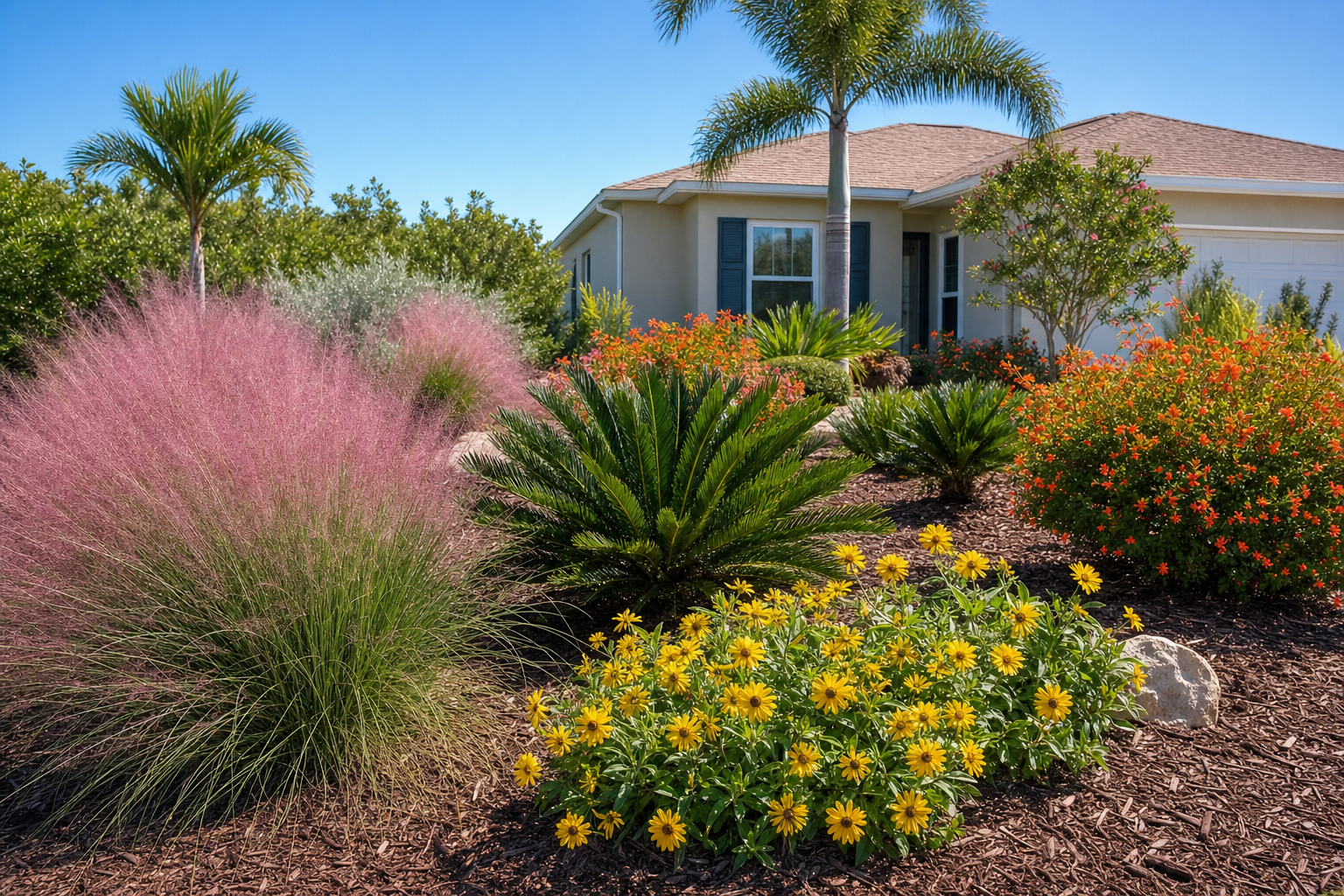
Every time SWFWMD tightens water restrictions, the same question comes up: Is there a way to have a beautiful Sarasota yard without being so dependent on irrigation?
The answer is yes — and it starts with choosing the right plants.
What Is Drought-Tolerant Landscaping?
Drought-tolerant landscaping doesn’t mean rocks and cacti. It means designing your outdoor space with plants that are adapted to Florida’s natural rainfall cycle — lush during the wet season, resilient during the dry season, and beautiful year-round.
The principle behind Florida-Friendly Landscaping™ (a UF/IFAS Extension program) is simple: right plant, right place. When plants are matched to your soil type, sun exposure, and moisture availability, they thrive with minimal supplemental irrigation.
The Best Drought-Tolerant Plants for Sarasota Yards
These plants are proven performers in Sarasota’s sandy soils and coastal climate:
Grasses & Groundcovers
- Muhly Grass (Muhlenbergia capillaris) — Stunning pink plumes in fall, extremely drought tolerant once established
- Liriope — Dense, low-maintenance groundcover that handles both drought and occasional flooding
- Sunshine Mimosa — Native groundcover with pink puffball flowers, spreads readily without irrigation
Shrubs
- Firebush (Hamelia patens) — Bright red-orange blooms nearly year-round, attracts hummingbirds, loves full sun and tolerates drought
- Simpson’s Stopper — Native Florida shrub with white flowers and red berries, excellent for hedges
- Walter’s Viburnum — Fast-growing native hedge plant, extremely drought tolerant once established
Trees
- Coontie (Zamia pumila) — Florida’s only native cycad, requires almost no irrigation once established
- Gumbo Limbo — Fast-growing coastal tree with remarkable drought and salt tolerance
- Live Oak — Florida’s iconic shade tree, deeply rooted and drought tolerant after establishment
Perennials & Flowers
- Beach Sunflower (Helianthus debilis) — Spreading groundcover native to coastal Florida, blooms prolifically with no irrigation
- Blanket Flower (Gaillardia) — Bright orange and red blooms, drought tolerant and deer resistant
How to Transition Your Landscape
You don’t have to rip everything out at once. The most practical approach:
- Start with your plant beds — replace high-water annuals and non-native shrubs with drought-tolerant natives
- Reduce lawn area — consider replacing sections of St. Augustine turf with drought-tolerant groundcovers or mulched beds
- Add mulch everywhere — 3–4 inches of mulch dramatically reduces irrigation needs across your entire landscape
- Switch plant beds to drip irrigation — drip delivers water directly to roots, exempts those zones from day/time restrictions, and uses 30–50% less water than spray
The ROI of Going Drought-Tolerant
Once established (typically after one to two seasons), drought-tolerant native plants require little to no supplemental irrigation. Many Sarasota homeowners who’ve made this transition report cutting their outdoor water use by 40–60% — and their landscape looks better than ever.