
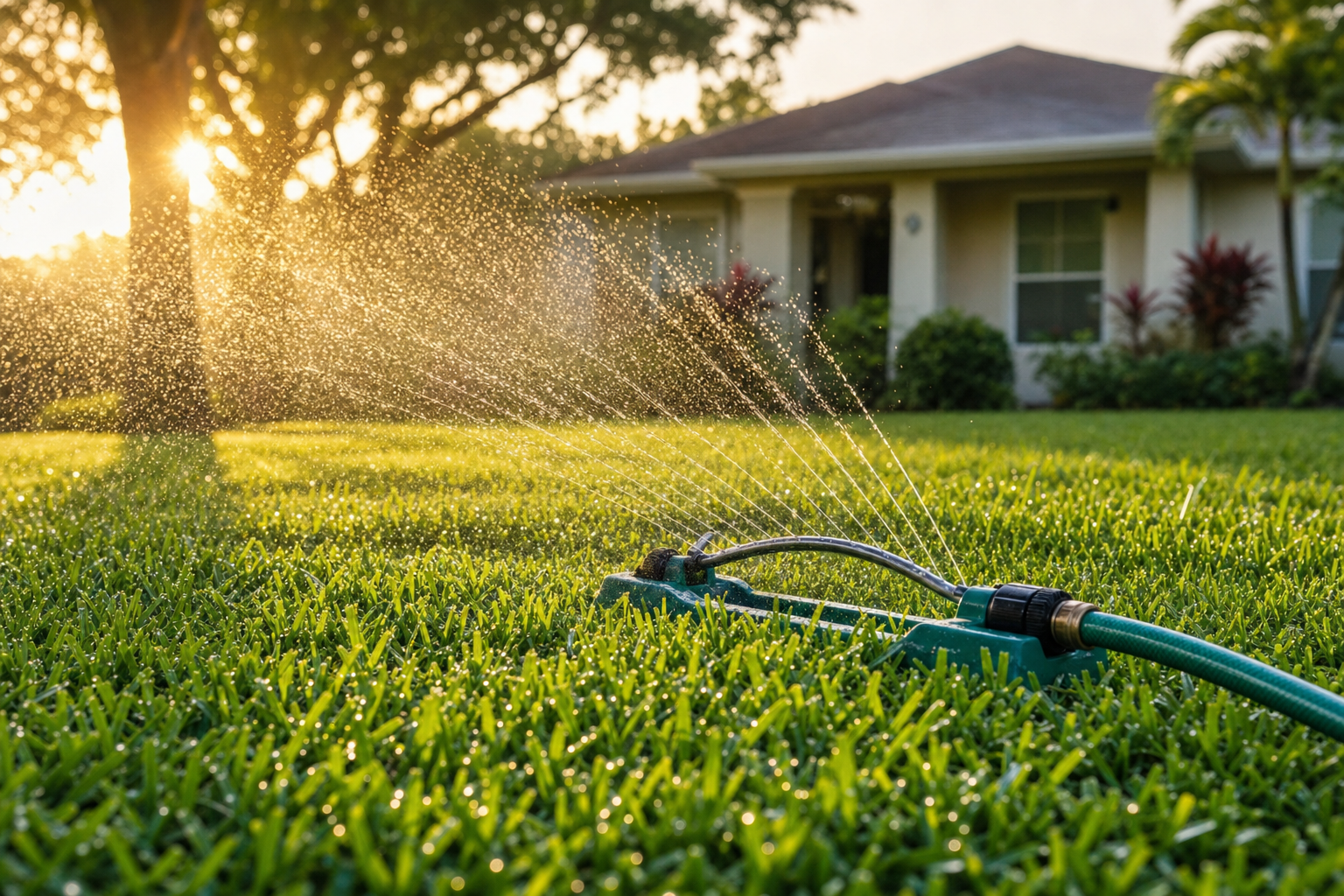
Ask ten Sarasota homeowners how often they water their lawn and you’ll get ten different answers. Some rely on a timer set years ago; others wait until the grass looks stressed. Neither approach is ideal in a climate as specific as Southwest Florida’s — and both can quietly rack up your water bill or damage the very turf you’re trying to protect.
After years of installing and servicing irrigation systems across Sarasota, Lakewood Ranch, Venice, and Palmetto, the team at Blue Stream has seen what works and what doesn’t. Here’s a practical, season-by-season guide to watering your Florida lawn the right way.
Why Florida Watering Is Different
Most lawn-care advice online is written for northern or western climates. Florida’s combination of sandy, fast-draining soils, intense sun, and a pronounced wet/dry season cycle means that a schedule that works in Ohio will actively harm a St. Augustine lawn in Sarasota.
During our wet season (roughly June through September), Sarasota receives an average of 7–9 inches of rain per month. During the dry season (November through May), we may see less than 2 inches over a span of weeks. Your irrigation system needs to respond to that swing — not run on a fixed schedule year-round.
The SWFWMD Two-Day-Per-Week Rule
Southwest Florida Water Management District (SWFWMD) year-round water restrictions limit most residential properties to two days of irrigation per week. Your designated days depend on your address (odd or even street number). Irrigation is permitted only between 8 p.m. and 8 a.m. — never in the heat of the day, when evaporation spikes.
Violating these restrictions can result in fines, and repeat violations can lead to your irrigation permit being revoked. Beyond compliance, watering during cooler nighttime hours is simply more efficient: more water reaches the root zone instead of evaporating off blades.
Seasonal watering guidelines for Sarasota
- Dry Season (Nov–May): Water twice per week, aiming for ¾ to 1 inch per session on your permitted days. St. Augustine and Zoysia both prefer deeper, less frequent watering over light daily sprinkles.
- Wet Season (June–Sept): Dial back to once per week or suspend irrigation entirely during weeks with more than 1.5 inches of rain. Overwatering in summer is the single most common cause of fungal disease we see on Sarasota lawns.
- Transition months (Oct, Nov): Monitor weekly. Florida’s October can swing between late-season storms and the first dry spells. Watch the grass, not just the calendar.
Signs Your Lawn Is Getting Too Little Water
Under-watered turf sends clear signals if you know what to look for:
- Grass blades fold lengthwise (especially visible on St. Augustine)
- Footprints remain visible in the lawn 30+ seconds after stepping on it
- Turf turns a blue-gray or dull green before going tan
- Soil pulls away from edges of beds and feels powdery an inch down
Signs Your Lawn Is Getting Too Much Water
Overwatering is actually the more common problem on Sarasota properties, partly because systems get set in dry season and forgotten through the summer rains. Watch for:
- Persistent mushrooms or fungal rings appearing overnight
- Gray leaf spot or large patch disease (brown irregular patches in summer)
- Constantly soggy areas, especially near the house foundation
- Moss or algae growth on soil between grass blades
- An unusually high water bill with no visible outdoor leak
Fungal disease from overwatering costs Sarasota homeowners far more in replanting and treatment than the occasional dry patch ever does. When in doubt, water less and watch the grass tell you what it needs.
The Case for a Smart Irrigation Controller
The single best upgrade you can make to an existing irrigation system is installing a smart, weather-based controller. Unlike conventional timers that run regardless of conditions, smart controllers pull real-time weather data and automatically skip scheduled cycles when rain is detected or predicted.
In Sarasota’s summer, this can mean your system goes three or four weeks without running a single cycle — which is exactly right. Smart controllers from brands like Rachio and Hunter Hydrawise are compatible with nearly all existing valve systems and can be controlled from your phone. Most homeowners recover the cost of the upgrade in reduced water bills within one or two years.
Additional efficiency upgrades worth considering
- Hunter MP Rotator nozzles: Replace standard fixed spray heads with rotary nozzles that apply water 30% more slowly, reducing runoff on sloped or compacted areas.
- Drip zones for beds: Ornamental beds and foundation plantings benefit enormously from drip irrigation, which delivers water directly to roots rather than spraying foliage. Drip is especially helpful for preventing fungal issues on low-growing plants.
- Rain/freeze sensors: Florida code requires functioning rain sensors on any new or significantly modified system. If yours isn’t working, it’s both a compliance issue and a waste of water.
- Zone-by-zone scheduling: Your lawn, shrubs, and groundcovers each have different water requirements. A well-programmed system runs separate schedules for each zone rather than one blanket setting.
When to Call a Professional
Irrigation systems in Florida age quickly. UV exposure degrades valve diaphragms, hard water minerals clog nozzles, and tree root growth shifts pipes over time. An annual tune-up — checking heads, adjusting coverage, testing pressure, and cleaning filters — keeps your system running at peak efficiency and prevents the slow, hidden leaks that drive up water bills.
If you notice dry streaks across your lawn, unusually green patches, or water pooling near the street, those are almost always signs of a misaligned or broken head. These are quick fixes when caught early and expensive lawn replacements when ignored.
Blue Stream installs, repairs, and services irrigation systems throughout Sarasota and the surrounding communities. If it’s been more than a year since your system was professionally checked — or if you’re not sure your controller is properly programmed for our seasons — it’s worth a conversation.