
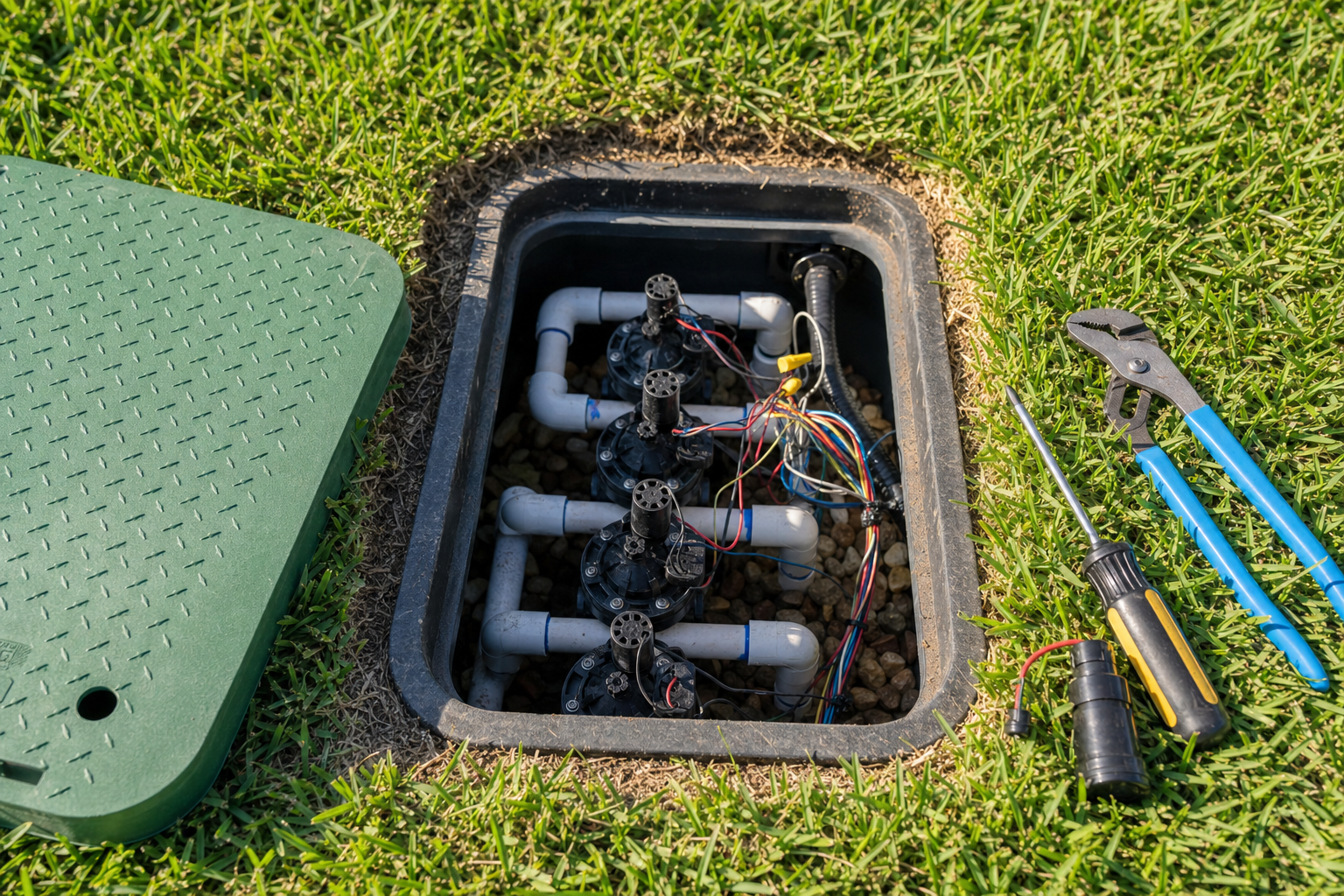
In most parts of the country, spring means turning the irrigation system back on after a winter shutdown. In Sarasota, it means something different: getting your system ready to handle the driest, most demanding months of the year before the rainy season rescues your lawn.
Here’s the complete pre-season checklist.
Step 1: Walk Every Zone Before You Touch the Controller
Before changing any settings, physically inspect each zone while it’s running. Look for:
- Heads that aren’t popping up fully (low pressure, debris in the body, or worn springs)
- Heads spraying the wrong direction (tilted from settling or mowing)
- Heads not retracting after the zone shuts off (worn seals, stuck mechanism)
- Obvious wet spots or dry spots
Note every issue before moving to the next step.
Step 2: Test Your Rain Sensor
This is non-negotiable. Florida law requires a functioning sensor on every automated irrigation system, and Phase 3 drought enforcement means a broken sensor is both a waste of water and a potential violation.
To test: hold a cup of water under the sensor and let it absorb. Your controller should either display a “sensor active” indicator or the next scheduled cycle should be interrupted. If nothing happens, the sensor needs service.
Step 3: Clean and Replace Nozzles
Spray nozzles clog with sand, algae, and mineral deposits over Florida’s dry season. Remove each nozzle, flush it with water, and inspect the filter screen. Clogged nozzles reduce output pressure and create dry spots that look like coverage gaps but are actually just dirty equipment.
This is also a good time to evaluate whether your spray nozzles should be upgraded to rotary nozzles (MP Rotators) for better efficiency — especially relevant under current drought restrictions.
Step 4: Adjust Your Controller Schedule for Dry Season
Even in a non-drought year, Sarasota’s April–June period is the driest stretch of the year. Your controller should be programmed for:
- Correct watering day(s) for current SWFWMD restrictions
- Appropriate start time (12:01 a.m.–4 a.m. or 8–11:59 p.m. under Phase 3)
- Cycle-and-soak programming for spray zones (multiple short cycles with a 30-minute rest period between them, rather than one long cycle that runs off Sarasota’s sandy soil)
- Separate run times per zone based on head type and plant needs
Step 5: Inspect Your Backflow Preventer
The backflow preventer protects your home’s potable water supply from contamination by irrigation water. It should be visually intact, with no corrosion, cracks, or leaking. In Florida, most backflow preventers require annual testing by a licensed contractor.
Step 6: Check Drip Emitters in Plant Beds
Flush each drip line by briefly removing an emitter cap and running the zone. Sand and debris from dry season can clog emitter openings. Drip systems are especially valuable under current restrictions since they’re exempt from day/time watering rules.