
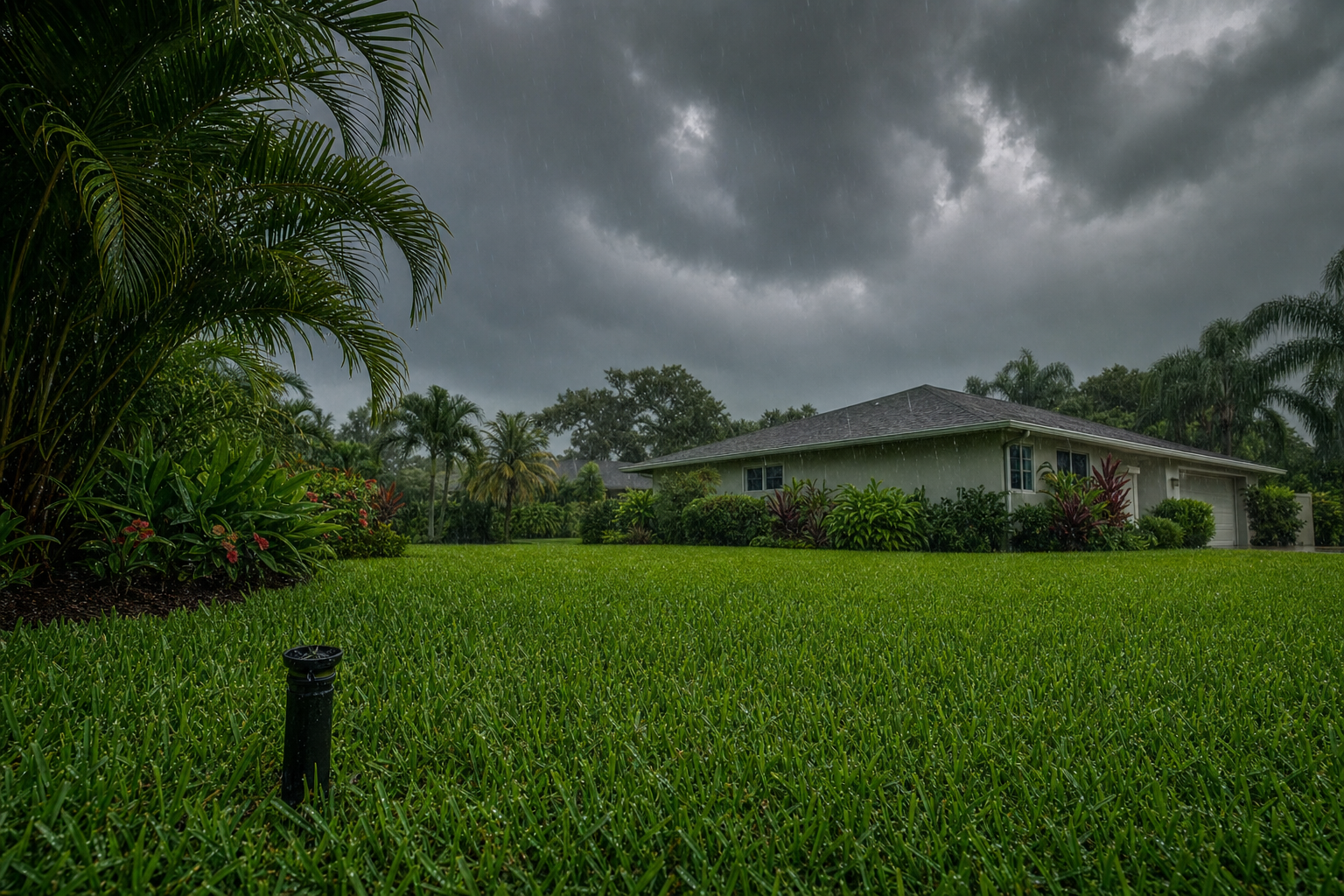
For the past several months, Sarasota homeowners have been running their irrigation systems at maximum efficiency — making every permitted watering minute count during the worst drought in recent memory.
But Florida’s wet season is coming, and when it arrives, it arrives fast. Between late June and September, Sarasota typically receives afternoon thunderstorms nearly every day, often delivering half an inch to an inch of rain in a single storm. Within a few weeks, the ground that was cracked and dry will be saturated again — and that means your irrigation system needs to shift gears.
The Risk of Not Adjusting
During drought, many homeowners and property managers crank up their irrigation schedules to compensate for the lack of rain. That’s understandable. But when the rainy season kicks in and those heavy schedules stay in place, you end up:
- Overwatering your lawn, promoting shallow root growth and fungal disease
- Wasting water (and money) on a lawn that’s already receiving plenty of natural rainfall
- Potentially violating restrictions — even during wet season, SWFWMD maintains a baseline 2-day-per-week schedule that applies to most Sarasota County residents
The Southwest Florida Water Management District recommends that during July, August, and September, most Sarasota lawns need no more than ½ to ¾ inch of water every two to three days — and on weeks with regular afternoon storms, irrigation should be turned off entirely.
Your Rainy Season Irrigation Transition Checklist
- Reduce run times per zone — cut drought-season run times by 30–50% as the rains arrive
- Check your rain sensor — it should be interrupting your system after every significant rainfall event. If it’s not, it needs service.
- Update your controller schedule — switch from your Phase 3 single-day deep soak to a 2-day wet-season schedule per SWFWMD guidelines
- Inspect heads after dormancy recovery — as grass greens up, check for heads buried under new growth or adjusted by lawn mowing
- Clear debris from nozzles — seasonal debris, pollen, and dirt from the dry season can clog spray nozzles
- Check drip emitters in plant beds — roots can grow into and clog drip emitters over a dry season
The Smart Controller Advantage
If your system has an ET-based smart controller (like Rachio, Rain Bird ESP-TM2, or Hunter Hydrawise), transitioning to wet season is largely automatic. These controllers pull local weather data and evapotranspiration rates and adjust run times and skip days in real time. During the rainy season, a properly configured smart controller will shut your system off for days at a time when rainfall is sufficient — without you doing anything.
If you’re still running a basic timer controller, this is the ideal moment to upgrade. The combination of Phase 3 drought restrictions and the upcoming wet season makes a smart controller one of the highest-ROI upgrades you can make to your Sarasota property.